No items found.


AI-Assisted Test Debugging
Table of Contents




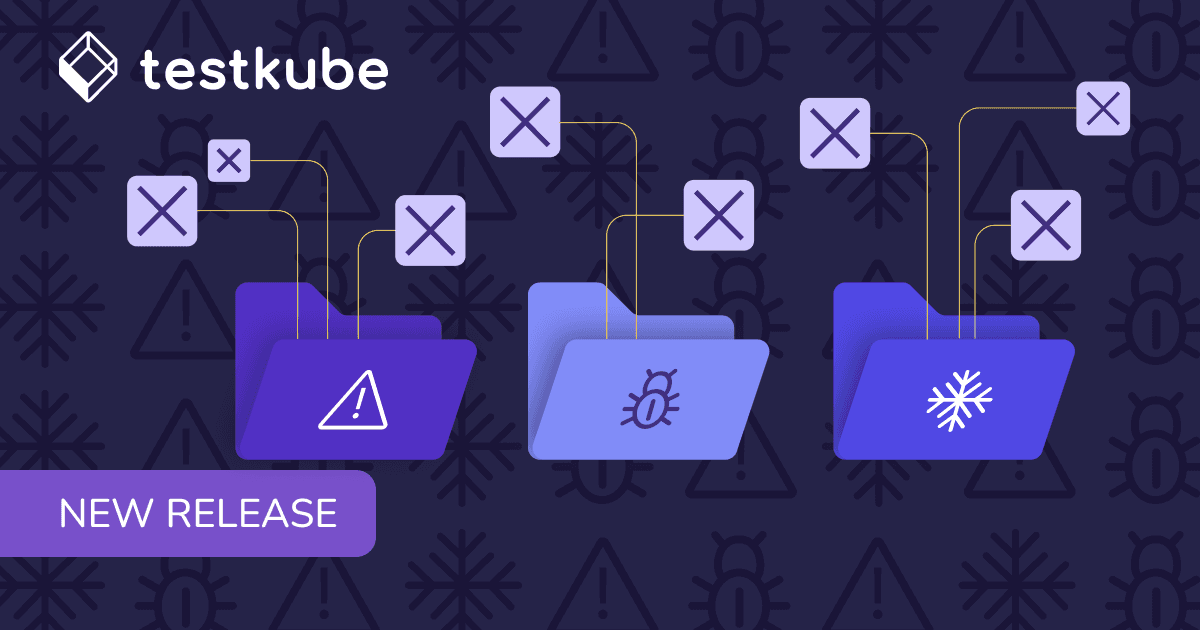


A failed test tells you something broke. Finding out what, across logs, pods, runners, and prior runs, is the part that eats the afternoon.
The debugging tax everyone pays
You know the drill when a test fails: open the CI logs, scroll, check pod status, compare with the last passing run, re-run to see if it happens again, repeat. For a platform engineer or a QA team running hundreds of automated tests, that tax adds up fast. A single failure can pull you into an hour of log-diving, and a subtle regression spread across services can derail a whole afternoon.
It is getting harder, too. AI-generated code speeds up development, which means more changes, more test runs, and more failures to sort through. Debug the old way and it becomes the bottleneck that slows everything else down.
Why the usual approaches fall short
Most teams piece together scattered data: logs in CI, pod events in the cluster, test output in the runner, and artifacts somewhere else. There is no single place to ask the obvious questions:
- What changed between the last passing run and this failure?
- Is this coming from the code change, or from flaky infrastructure underneath it?
- Which service or config update caused it?
Generic AI tools do not close this, because they do not know your test history, your Kubernetes setup, or your execution details. So you copy and paste logs into a chat window and hope for something useful. AI can speed up debugging, but only when it has the right context: centralized, structured test observability.
What changes when AI can see everything
Debugging gets much faster when the AI can see everything you see, and more: full run history for every workflow, logs and artifacts and metadata captured automatically, side-by-side comparison of passing and failing runs, and pattern detection across executions over time. With that foundation, the AI is not guessing. It points straight to the evidence, whether that is a specific log line, a config change, or a service update, so you get answers instead of more searching.
How Testkube enables it
Testkube runs your tests natively inside Kubernetes and captures everything in one place. Run history, logs, artifacts, timing, and resource usage are unified, which is the foundation the AI needs to help you debug faster. That foundation shows up in four ways.
The AI Assistant handles root cause analysis. You ask natural questions about any failing workflow, "Why did this start failing yesterday?", "What is different between run 47 and run 52?", "Compare the latest runs across us-east, us-west, and us-central," or "Is this related to the API timeout we saw last week?" The Assistant digs into your execution history, compares runs, and gives evidence-based answers that highlight exactly what changed, so you know where to look first.
Run-to-run comparison lets you visually compare logs from any two runs to see what changed in status and error messages, so you drill straight to the differences that matter. Centralized logs and artifacts come for free, because tests execute inside Kubernetes and all output is captured automatically, with no chasing logs across CI nodes and cluster namespaces. And MCP integration closes the loop for IDE-based debugging: if your team uses MCP with AI-enabled IDEs and local agents, you review the failure in Testkube, fix it in your IDE, generate a targeted regression test, and push it back to the cluster, validating the fix without leaving your workflow.
Example: a staging failure, resolved in five minutes
Say a critical end-to-end workflow starts failing in staging. Instead of the usual log hunt:
- Open the failing run in Testkube.
- Ask the AI Assistant: "What changed since the last passing run?"
- The Assistant finds that a downstream service updated its image tag and started returning 500 errors on a specific endpoint.
- You fix the service configuration and push the change.
- Testkube re-runs the workflow and confirms the fix.
Done in five minutes instead of two hours.
Who this is for
- Platform and DevOps engineers who own test infrastructure and want faster incident response across clusters.
- QA and SDET teams managing large suites who are tired of triaging failures instead of improving coverage.
- Developers who want clear, actionable explanations when a build goes red, instead of cryptic logs and guesswork.
Why it matters now
AI is speeding up how fast teams write code, and testing infrastructure has to keep up. If every new feature brings a wave of failures that take hours to debug, the velocity gains evaporate. Testkube gives AI the observability layer it needs to make debugging fast, so engineers get answers in minutes, not hours, and teams ship with confidence instead of crossed fingers.
Stop the log hunt
A failed test should hand you an answer, not an afternoon. Testkube captures every run in Kubernetes and gives the AI the full context to point straight at what changed, so root cause takes minutes.
Test faster, ship with confidence, and stay in control.
Run any test, anytime, anywhere
Curious how Testkube can support your team's testing strategy?
Fill out the form and we'll walk you through what's possible.