
Table of Contents
Start your free trial.
Start your free trial.

Start your free trial.


Table of Contents
Executive Summary
Testing in Kubernetes is complex, and we all agree on this. It’s like preparing a massive meal, with multiple chefs (microservices) responsible for every dish. They have to coordinate to make sure the right ingredients (containers) are used and that serving portions adjust effortlessly to the crowd (scaling) at a banquet.
In this blog post, we’ll look at the nitty-gritty of testing in Kubernetes and how Testkube makes testing in Kubernetes easy.
Testing in Kubernetes
What makes Kubernetes the default choice as a container orchestrator is its ability to automate the deployment, scaling, and management of containers across diverse environments. Testing in Kubernetes represents an interesting paradigm shift.
Let’s start by understanding some of the benefits that Kubernetes brings to the table from a testing perspective:
- Kubernetes’ ability to spin containers up or down based on testing requirements allows for elastic and efficient resource allocation. This way, it can dynamically adjust testing to match application demands.
- The self-healing capabilities of Kubernetes help create resilient testing environments that automatically replace failed containers or nodes and keep continuous testing running without interruptions.
- The declarative configuration that Kubernetes provides through YAML files lets you declare how you want your tests to run, without having to learn complex tools to achieve this.
While these are some of the benefits of testing in Kubernetes, the current set of testing tools has limitations that prevent teams from taking full advantage of them.
- Non-native tooling limitation: Most conventional testing tools aren’t built for the cloud and often lack native Kubernetes support. This prevents them from harnessing the full capability of Kubernetes, which often leads to inefficient testing practices.
- Security vulnerabilities: Executing tests from outside Kubernetes clusters poses significant security risks, from compromising application data to exposing critical functionality outside the secure cluster environment.
By now, we understand that there is a gap between conventional testing tools and the dynamic capabilities of Kubernetes. To fill this gap, tools like Testkube simplify testing workflows and make the testing process efficient. Let’s look at how in the following section.
How Testkube Makes Testing in Kubernetes Easy
Testkube is a testing framework designed for Kubernetes. It turns otherwise intricate testing workflows into simple, easy-to-use ones. Through its intuitive design, Testkube simplifies the complexities of testing in Kubernetes.
- Kubernetes-native: Testkube is a Kubernetes-native test orchestration framework that leverages the core strengths of Kubernetes. It has its own custom resource definitions (CRDs) that interact with Kubernetes components, allowing it to use the full potential of Kubernetes for efficient testing.
- Secure environment: Testkube runs tests inside the cluster, so you don’t need to expose your application outside of the cluster. This protects your clusters from external threats. That said, Testkube lets you execute tests within the cluster or outside it, based on your preferences.
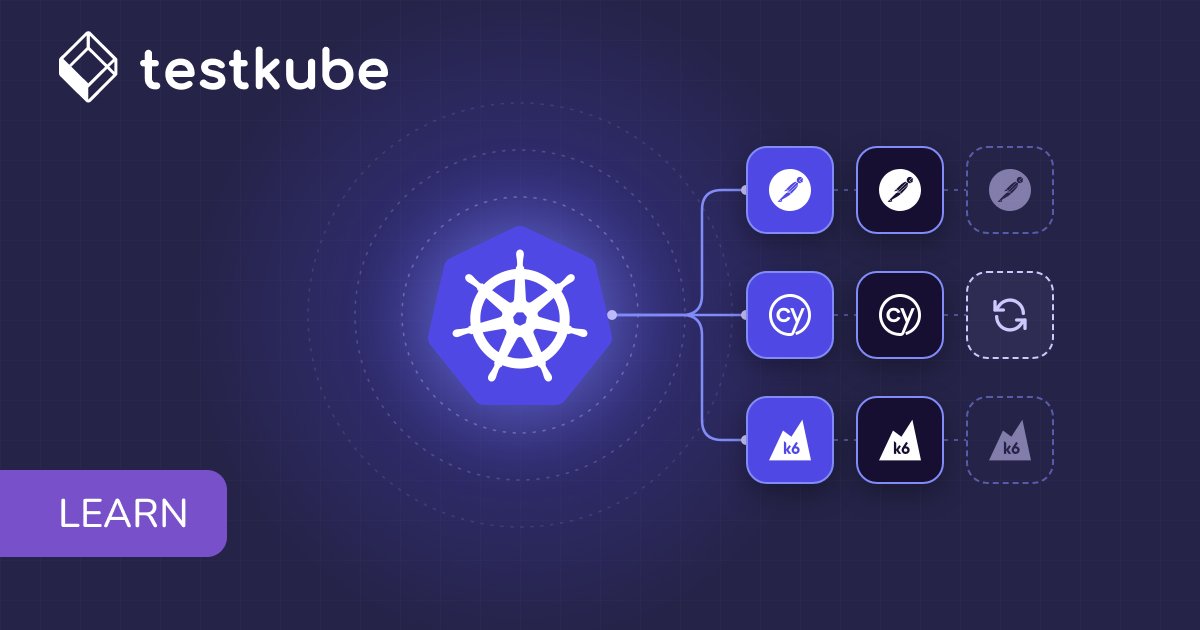
- Tool integration: Testkube comes with out-of-the-box integrations for the most popular testing tools, including Postman, Cypress, and k6, to name a few. It also lets you add any custom testing tool in a few simple steps and run it natively on Kubernetes.
You can refer to the complete list of Testkube features to learn more about Testkube and how it makes testing in Kubernetes easy.
Summary
Testing is an indispensable part of the software development process for companies that use Kubernetes clusters to host their applications. As we saw earlier, testing in Kubernetes is complex because of the many components involved, which make managing CI/CD pipelines and testing tools difficult.
That’s where Testkube’s Kubernetes-native testing approach brings ease to Kubernetes testing. It lets you plug in virtually any testing tool and run tests natively. Why not try Testkube? Head to Testkube Cloud to see how Testkube makes testing in Kubernetes effortless.
For any questions or assistance, join our Slack community, or schedule a demo.
Happy testing!
Frequently Asked Questions
{{banner-get-started}}
About Testkube
Testkube is the open testing platform for AI-driven engineering teams. It runs tests directly in your Kubernetes clusters, works with any CI/CD system, and supports every testing tool your team uses. By removing CI/CD bottlenecks, Testkube helps teams ship faster with confidence.
Get Started with a trial to see Testkube in action.