
Table of Contents
Start your free trial.
Table of Contents
Executive Summary
With Java being a widely adopted programming language, it certainly plays a crucial role in developing applications for Kubernetes environments. This article explores the significance of testing containerized Java applications, the challenges developers face, various testing approaches, and how Testkube simplifies the testing process.
Why Test Containerized Java Applications?
Containerization, especially with Kubernetes, brings unprecedented flexibility and scalability to modern applications. However, the advantages of this technology come with the responsibility of ensuring that your containerized Java apps function as intended. Here's why testing is crucial:
- Consistency Across Environments: Containers encapsulate an application and its dependencies, but differences in environments can still lead to unexpected issues. Testing ensures consistent behavior across various environments.
- Integration Challenges: Kubernetes applications often comprise multiple microservices, making integration testing vital to identify and resolve issues arising from the interaction of these components.
- Scaling Concerns: Kubernetes excels at scaling applications, but it introduces new challenges. Testing helps validate that your Java applications scale seamlessly in response to varying workloads.
Challenges in Testing Containerized Java Applications
Despite the advantages, testing containerized Java applications in Kubernetes environments poses unique challenges:
- Orchestration Complexity: Kubernetes orchestrates containerized applications, making testing complex due to the distributed nature of microservices.
- Dynamic Environments: Containers can be ephemeral, leading to challenges in replicating and testing the dynamic nature of Kubernetes environments.
- Resource Isolation: Ensuring resource isolation for each container is crucial. Failing to do so can result in resource contention and unpredictable behavior.
Testing Approaches
To overcome these challenges, developers can employ various testing approaches:
- Unit Testing: Validate the functionality of individual components within a container.
- Integration Testing: Verify the interaction between different microservices and their components.
- End-to-End Testing: Test the entire application workflow to identify issues related to the integration of multiple containers.
- Performance Testing: Assess the scalability and responsiveness of Java applications under different loads.
- Security Testing: Identify vulnerabilities and potential security threats in containerized applications.
To read more in-depth information about the different types of testing techniques for your Kubernetes application, head over to our Types of Testing article.
Although there are multiple ways in which we can test our Java apps, the real challenge comes with putting these practices into action when working with Kubernetes clusters. Let’s take a look at how Testkube helps us accomplish this:
Simplifying Java Testing with Testkube
Testkube is an emerging tool designed to streamline the testing process for your applications in Kubernetes environments. It offers the following features:
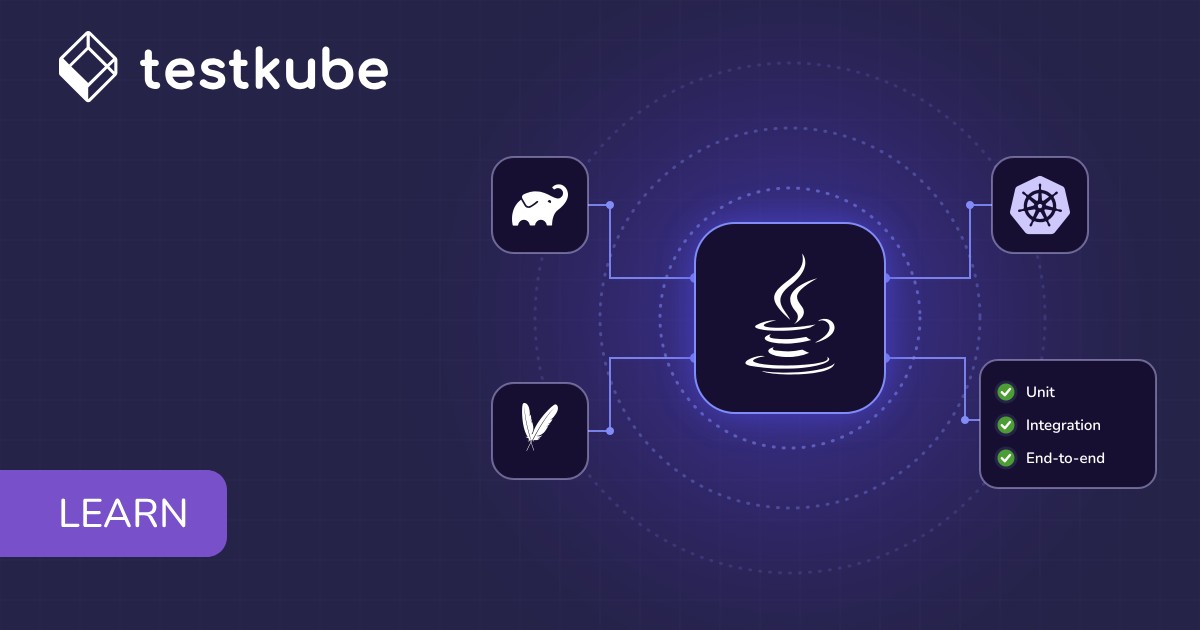
Tool Support: Testkube comes with out-of-the-box support for Java libraries and testing tools. This includes Gradle, Maven, REST Assured tests, and more. This means you don’t have to integrate them yourself; you simply call them when creating tests and test suites.
- If you're working with the Gradle build tool, check out our guide on running Gradle with Testkube.
- Using Maven? Then our Maven tutorial is for you.
- And finally, if you're using the REST Assured testing framework, we've written a comprehensive guide to running these tests with both Maven and Gradle.
Containerized Testing: Testkube allows developers to create isolated testing environments within containers, ensuring a consistent and reproducible testing environment.
Kubernetes Integration: Testkube is Kubernetes-native by nature. This means all your tests run from within your clusters and are defined as CRDs. This way, you can seamlessly integrate testing into your Kubernetes deployment pipeline, enabling automated testing at each stage of development.
Parallel Execution: Testkube supports parallel test execution, allowing you to also mix and match different tools in a single test suite, thus reducing testing time and improving efficiency.
Scalability Testing: Easily simulate various scaling scenarios to validate the application's performance under different workloads.
Conclusion
Testing containerized Java applications for Kubernetes is essential for ensuring the reliability, scalability, and security of your software. While challenges exist, various testing approaches and tools, such as Testkube, can simplify the testing process, allowing developers to build robust and resilient applications that thrive in Kubernetes environments. By adopting comprehensive testing strategies and leveraging innovative tools, developers can confidently deploy containerized Java applications with the assurance of their functionality and performance.
To experience the full potential of testing on Testkube, you can go ahead and give Testkube a try today.
Try out the various test types in Testkube and witness firsthand how Testkube simplifies and empowers your testing process with its Kubernetes-native capabilities. Join our Slack community for guidance and support.
Frequently Asked Questions
{{banner-get-started}}
About Testkube
Testkube is the testing platform for the agentic SDLC. It runs tests directly in your Kubernetes clusters, works with any CI/CD system, and supports every testing tool your team uses. By removing CI/CD bottlenecks, Testkube helps teams ship faster with confidence.
Get Started with a trial to see Testkube in action.