Table of Contents
Further Reading

No items found.
📊 The Testing Maturity Gap: a 5-level model for Kubernetes testing. Find your level →


When a test fails, the answer is usually somewhere other than the test output. The work is connecting that failure to what changed around it, and that is the part that eats the afternoon.
Test failures do not happen in isolation. A failing API test might trace back to a recent code change. A flaky end-to-end test might come from infrastructure instability. A sudden spike in failures might line up with a deployment or a config update.
The catch is that most troubleshooting happens in silos. You check test logs in one tool, pull recent commits in another, and review infrastructure state in a third. Building the full picture means jumping between systems, lining up timestamps by hand, and holding all of it in your head.
That fragmented workflow slows root cause analysis and raises the odds of missing the real issue. When the data that explains a failure lives across GitHub, Datadog, and your test platform, no single tool can connect the dots on its own.
Testkube's AI Agent Framework lets agents pull context from external systems through MCP servers. Your troubleshooting agents can reach source code changes, infrastructure state, observability data, and more, all while they analyze a test failure.
Rather than reading logs alone, an agent can line a failure up against recent commits, check Kubernetes cluster health, or pull metrics from your monitoring stack. The analysis comes back faster and more accurate because it is grounded in the full context of what is happening across your environment.
The framework connects an agent to the systems that hold the answer:
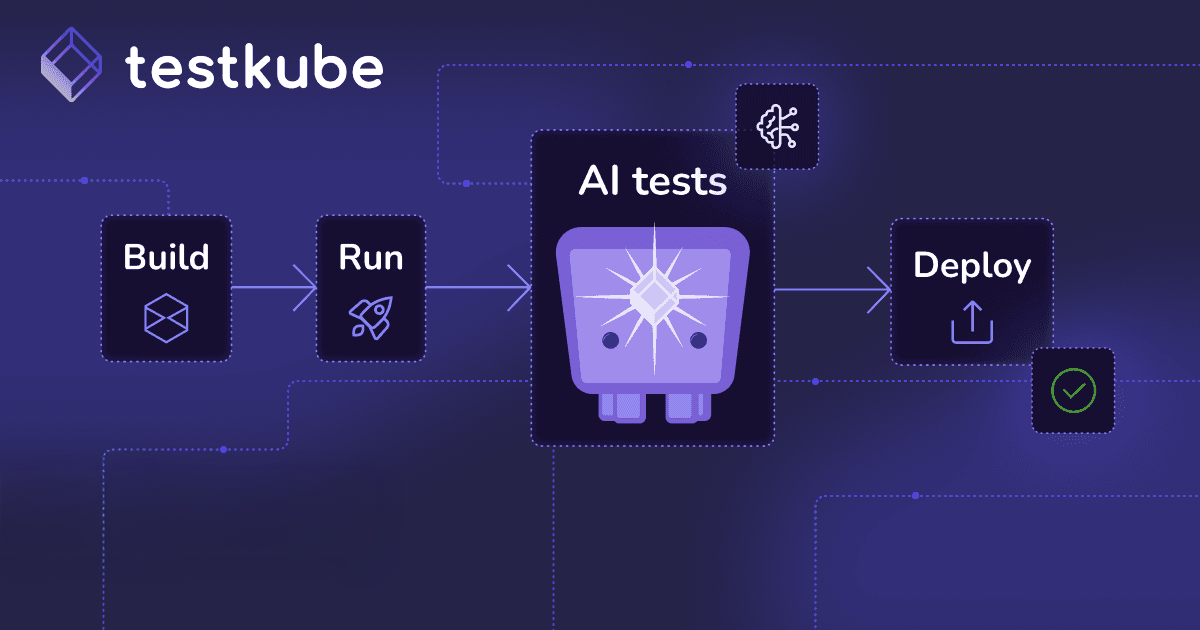
The flow from a failed run to an answer looks like this:
As one example, a flakiness analysis agent can read the failed test logs, then check your GitHub repository for recent changes to the test code itself. If it finds a commit that modified the failing test, it surfaces that link and explains how the change could be causing the instability.
Standalone AI tools have no access to your internal systems. Pasting logs into ChatGPT loses the execution context and cannot correlate with live data from GitHub or Kubernetes. Testkube agents connect to your ecosystem through MCP, so the analysis rests on real, current data from across your environment. Because it works over MCP, you are not tied to a single AI vendor or a fixed set of integrations, and the more context you give an agent, the better its analysis gets.
Root cause analysis works when the AI can see everything you can see, and the systems around it. Testkube grounds every agent in your real test history, your cluster, and your observability data, so failures get explained in minutes instead of an afternoon of tool-hopping.
Test faster, ship with confidence, and stay in control.