OverviewFinding the root cause is only half the work. Testkube's AI Agent Framework goes further: a remediation agent reads the test logs, finds the cause, correlates it with recent commits, generates a fix, and opens a pull request in your repository, all from inside Testkube. The agent never merges on its own. It hands you a review-ready PR with its reasoning, so your team stays in control of what ships.
Knowing what broke is progress. Shipping the fix is the part that still drains the afternoon, and that is the gap this closes.
Finding the bug is the easy part
Finding the root cause of a test failure is only half the battle. Once you know what is broken, you still have to fix it.
That means switching from your test platform to your IDE, pulling the latest code, making the change, creating a branch, writing a commit message, and opening a pull request. For a simple bug, that runs 10 to 15 minutes. For more complex or unfamiliar code, it can stretch past 30.
Multiply that across a team handling dozens of failures a week and remediation turns into a real time sink. The delay between spotting a problem and shipping a fix also carries risk. Broken tests block pipelines, slow releases, and chip away at confidence in your suite. The handoff from "I know what is wrong" to "it is fixed" is where momentum stalls.
From failure to pull request, in one pass
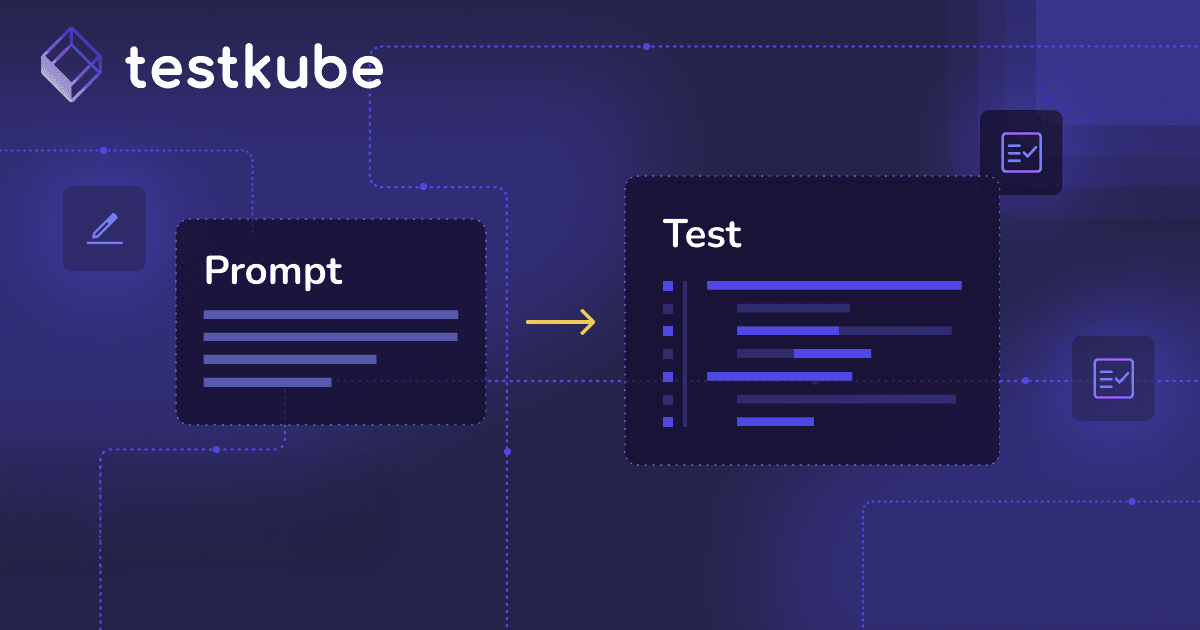
Testkube's AI Agent Framework runs agents that go past analysis and act on the failure directly. A remediation agent reads the test logs, identifies the root cause, correlates it with recent code changes, generates a fix, and opens a pull request in your repository, all without leaving Testkube.
That closes the loop between detection and resolution. Instead of copying error messages into your IDE, you get a ready-to-review PR with a clear account of what was wrong and how the agent tried to fix it.
What happens when you click AI Analyze
A remediation agent combines two MCP server connections: the Testkube MCP Server for test execution data, and a GitHub or GitLab MCP Server for repository access. From there:
The Testkube MCP Server gives the agent execution logs, artifacts, failure details, and workflow metadata, so it understands why a test failed rather than only that it failed.
You add the GitHub or GitLab MCP Server with a scoped access token. The agent can list recent commits, create branches, commit files, and open pull requests. It cannot delete files or merge code. Testkube links workflows to repositories through annotations or git configuration, so the agent knows where to target the fix.
From a failed workflow execution, click AI Analyze, choose your remediation agent, and run it. The agent investigates logs and artifacts, examines recent commits, identifies the root cause, and opens a pull request with its analysis and proposed fix.
Review and decide. The agent merges nothing on its own. It proposes a fix, explains its reasoning, and hands it to your team to merge, refine, or reject.
Need the analysis step first? See how agents pull context from across your stack to find the root cause before they fix it. Read: Cross-System Root Cause Analysis →
Key capabilities
Analyze failed test logs and artifacts to find the root cause.
Inspect recent commits in connected repositories to link failures to code changes.
Generate a proposed fix from that analysis.
Create a branch and commit the fix automatically.
Open a pull request describing the issue and the remediation approach.
Optionally notify teams in Slack or open tracking issues in Jira.
What changes for your team
Before
After
Remediation runs 30 minutes or more of manual work per common failure.
Common failures get a proposed fix in under 5 minutes.
You switch between test platform, IDE, and repo to ship a fix.
The fix is prepared from inside Testkube, with less context switching.
A gap sits between detection and fix while releases wait.
Detection and fix close together, so release cycles keep moving.
Changes risk shipping without a review step.
The agent opens review-ready PRs, and nothing auto-merges.
Scoped, not unleashed
Giving an AI agent access to your codebase sounds risky, so Testkube keeps agents scoped and safe.
You choose exactly which tools an agent can use. A remediation agent can create branches and open PRs, but cannot delete files or merge code.
GitHub and GitLab tokens can be scoped to specific repositories and actions, so you control what the agent can touch.
Agents propose changes through pull requests. Your team reviews and merges, or does not. Nothing ships without approval.
For sensitive actions, Testkube can require manual approval before the agent proceeds, so you see what it plans to do before it does it.
Why generic assistants fall short
Generic AI coding assistants can suggest fixes, but they work blind. They see only the error message you paste in, with no access to your test execution data, failure history, or environment context. Testkube remediation agents start from the failure itself. They read the logs, the artifacts, and the execution history, and correlate that with your source code and recent commits, so the fixes rest on what actually went wrong.
Knowing what broke should lead straight to a fix in review, not another half hour of context switching. Testkube turns a failed run into a review-ready pull request, with your team in control of what merges.
Test faster, ship with confidence, and stay in control.
Close the loop from failure to fix. Connect your repo and let agents open review-ready PRs.






.jpg)