Table of Contents
Start your free trial.
Start your free trial.

Start your free trial.



Table of Contents
Executive Summary
Someone in leadership is going to ask you: "Are we ready to ship?"
And you are going to pause. Not because you do not know the answer, but because assembling it takes work. The unit tests ran in GitHub Actions. The load tests were triggered manually by a developer who may or may not have shared the results. The smoke tests ran in staging, but staging drifted from production two sprints ago. QA signed off on a spreadsheet. And the only person who knows whether the integration tests actually passed is on PTO.
You cannot prove release readiness when the evidence is scattered across five tools, three teams, and a Slack thread from last Tuesday.
This is the problem that keeps SRE and DevOps managers up at night. Not whether the tests exist (they usually do), but whether you can see them, trust them, and point to them when the CTO asks why a release should ship.
Want the platform engineering view? Why test orchestration is now a platform concern, not a QA-only one. Read: Test unification in platform engineering →
The real cost of scattered testing
What does fragmented testing actually cost a team? The technical debt of scattered testing does not show up in your backlog. It shows up in your calendar. Senior engineering time gets spent coordinating instead of building. DocNetwork spent 30+ person-hours per week on manual QA and cross-team coordination meetings before they centralized.
The technical debt of fragmented testing does not show up in your backlog. It shows up in your calendar.
DocNetwork, a healthcare tech company serving over 3,000 organizations, lived this problem at scale. Their web application handles massive traffic spikes (think thousands of clicks per second when camp registrations open at midnight). The stakes for release confidence are high. A bad deployment during peak registration means kids do not get into camp, parents call support, and the engineering team spends the next week in postmortems.
Before they centralized their testing, deployments consumed over 30 person-hours per week in manual QA and cross-team coordination meetings. Matt Mclane, the DevOps Engineer Lead, described the situation: the codebase had grown organically over more than a decade, with a lot of legacy code and not a lot of automated testing. There were unit tests, but no load testing, no smoke tests, and no way to simulate user behavior after deployment.
The feedback loop was brutal. Servers would crash during registration surges, and the team could only investigate with postmortem logs. By the time they understood what went wrong, the next registration event was already approaching.
Why meetings are not a release readiness strategy
Why does scattered testing always end up in a deployment meeting? When no single person or system can answer "are we ready to ship?" without polling everyone individually, a weekly meeting becomes the workaround. The meeting becomes the release gate, not the tests. This costs senior engineering hours, produces false confidence (a verbal "yes" is not a dashboard), and caps your release speed at the meeting cadence.
Here is what typically happens at companies with scattered testing: someone creates a weekly deployment meeting. Every team sends a representative. They go around the room: "Did your tests pass?" "Mostly." "What about the integration suite?" "I think so, let me check." "When did it last run?" Silence.
The meeting becomes the release gate. Not the tests. Not the results. The meeting.
DocNetwork had this exact pattern. Releases involved spinning up environments, running regression checks manually, and coordinating across teams to confirm nothing was broken. The meeting existed because no single person or system could answer the question "are we ready?" without polling everyone individually.
This is expensive in three ways. First, the meeting itself: 30+ person-hours per week of senior engineering time spent coordinating instead of building. Second, the false confidence: a verbal "yes" in a meeting is not the same as a dashboard showing green across every test suite. Third, the speed penalty: when the release gate is a calendar invite, you can only ship as fast as the meeting cadence allows.
What actually changes when you centralize
What changes when test results are centralized in one place? The deployment meeting becomes unnecessary. Everyone (engineers, QA, product, leadership) sees the same picture of release readiness. Tests run automatically on deployment, results land in one dashboard, and failures are debuggable in real time without scheduling time with multiple teams.
DocNetwork found Testkube after they started experimenting with k6 for load testing. The load tests were useful, but they were only part of the picture. What they needed was a single place where everyone (engineers, QA, product) could see what ran, what passed, and what broke.
Matt put it simply: it was not just about running k6 tests. It was about having a place where non-technical people could see what happened, review artifacts, and get real insight.
That shift from "tests ran somewhere" to "results are visible to everyone" is what killed the deployment meeting. Once Testkube was integrated into their Kubernetes stack, with tests defined in Git and synced via Argo CD, the workflow changed:
QA initiates the deployment. Testkube runs the tests automatically (Playwright for UI, k6 for load). Results, including screenshots of failed UI tests, land in one dashboard. If something breaks, everyone can see exactly what happened without scheduling a meeting to ask about it.
As Matt described it: they eliminated the deployment meetings altogether. QA initiates the deployment, Testkube runs the tests, and if something breaks, they can see exactly what happened. It streamlined the entire process.
See how DocNetwork saved 30 DevOps hours every week. Read the case study →
The four things an SRE manager actually needs
What does an SRE manager need to prove release readiness? Four things. A single source of truth for test results. Automated quality gates tied to deployments. Visibility for non-technical stakeholders. Historical trend data showing test stability and performance over time. Together these replace the verbal "are we ready?" with evidence anyone can verify.
Release readiness is not a feeling. It is evidence. Here is what that evidence looks like when your testing is centralized:
A single source of truth for test results. Not "check GitHub Actions for unit tests, Grafana for load tests, and ask Sarah about the smoke tests." One dashboard where every test type, every environment, every run is visible. When the CTO asks if you are ready to ship, you share a link instead of scheduling a meeting. This is what centralized test observability looks like in practice.
Automated quality gates tied to deployments. Tests that run automatically when code hits an environment, not when someone remembers to trigger them. DocNetwork's Playwright tests now execute on every deployment to QA. No human has to remember, initiate, or monitor the process. If tests fail, the team gets notified. If they pass, the release moves forward. Quality gates become structural, not procedural.
Visibility for non-technical stakeholders. This is the part most testing tools get wrong. Your VP of Engineering does not need to read a k6 output file. They need to see that the load test ran, that it simulated the expected traffic pattern, and that response times stayed within SLA. Testkube's interface gives that visibility without requiring everyone to learn kubectl.
Historical trend data. One green run does not prove readiness. A pattern of green runs across the last ten deployments does. When you can show that test pass rates have been stable, that performance has not regressed, and that no new failure patterns have emerged, you are not just ready for this release. You are building a track record that justifies faster release cycles.
What DocNetwork would have built without Testkube
Why does the build-vs-buy decision matter so much for testing infrastructure? Because your team is not in the business of building testing platforms. Every hour spent maintaining homegrown orchestration is an hour not spent shipping product. DocNetwork's Matt put it directly: "We are not in the business of building testing platforms. We are here to help kids get to camp."
This is the part that resonated most for me. When asked what the alternative would have been, Matt was blunt: they would have had to cobble together a mix of open source tools and write their own interface. An expensive, time-consuming endeavor that would not align with their core mission.
Then he added the line that captures why this matters for every SRE manager evaluating build-vs-buy: "We're not in the business of building testing platforms. We're here to help kids get to camp."
Every organization has a version of this. You are not in the business of building testing infrastructure. You are in the business of shipping reliable software. The question is whether your current setup lets you prove that reliability quickly, or whether it takes 30 hours of meetings per week to approximate an answer.
How to start if you are in this situation
How do you move from scattered testing to centralized release readiness? Four steps. Audit what tests already exist and where their results live. Pick the highest-stakes release gate first and centralize that. Make results visible to everyone who needs to answer "are we ready?", not just the developer who wrote the test. Automate the trigger so tests fire on deployment, not someone's todo list.
If your release readiness conversation currently involves a meeting, a spreadsheet, or the phrase "I think those tests passed," here is a practical path forward.
Audit what you actually have. List every test suite, where it runs, who owns it, and where the results go. Most teams are surprised to find tests running in four or five different systems with no centralized view.
Pick the highest-stakes release gate first. For DocNetwork, it was the registration surge. For your team, it might be the weekly production deploy or a compliance-critical release. Centralize the tests for that gate first and prove the model works.
Make results visible to everyone who asks "are we ready?" This means product managers, QA leads, and engineering directors, not just the developer who wrote the test. If the only way to check test results requires SSH access or a CI login, you do not have visibility. You have tribal knowledge.
Automate the trigger. The single biggest improvement is removing the human from the "remember to run tests" step. Tests should fire on deployment, on schedule, or on Kubernetes events, not on someone's todo list.
Stop assembling the answer
The next time someone asks "are we ready to release?", you should be able to answer in under ten seconds. Not because you memorized the status, but because you can point to a dashboard that shows every test, every result, every environment, updated in real time.
DocNetwork went from 30+ hours per week of manual coordination to automated quality gates with full visibility. The deployment meetings are gone. The QA engineer focuses on meaningful validation instead of re-checking the same features. And when traffic spikes hit, the team has already proven their system can handle it.
Key takeaways
- Scattered testing turns release readiness into a meeting. When test results live in five different systems, the only way to answer "are we ready to ship?" is to poll everyone individually. The meeting becomes the release gate.
- The cost is invisible in your backlog but visible in your calendar. DocNetwork spent 30+ person-hours per week on manual QA coordination before centralizing. That is senior engineering time spent on overhead instead of shipping.
- Centralization changes the workflow, not just the tooling. When everyone sees the same dashboard, deployment meetings stop being necessary. QA initiates, automation runs the tests, and failures debug in one place.
- SRE managers need four things: single source of truth, automated gates, stakeholder visibility, and trend data. Together they replace the verbal "yes" with evidence anyone can verify.
- Start with your highest-stakes release gate. Centralize the tests for one critical deployment first, prove the model, then expand. Trying to migrate everything at once is what kills the initiative.
Frequently asked questions
How do you prove release readiness when testing tools are scattered?
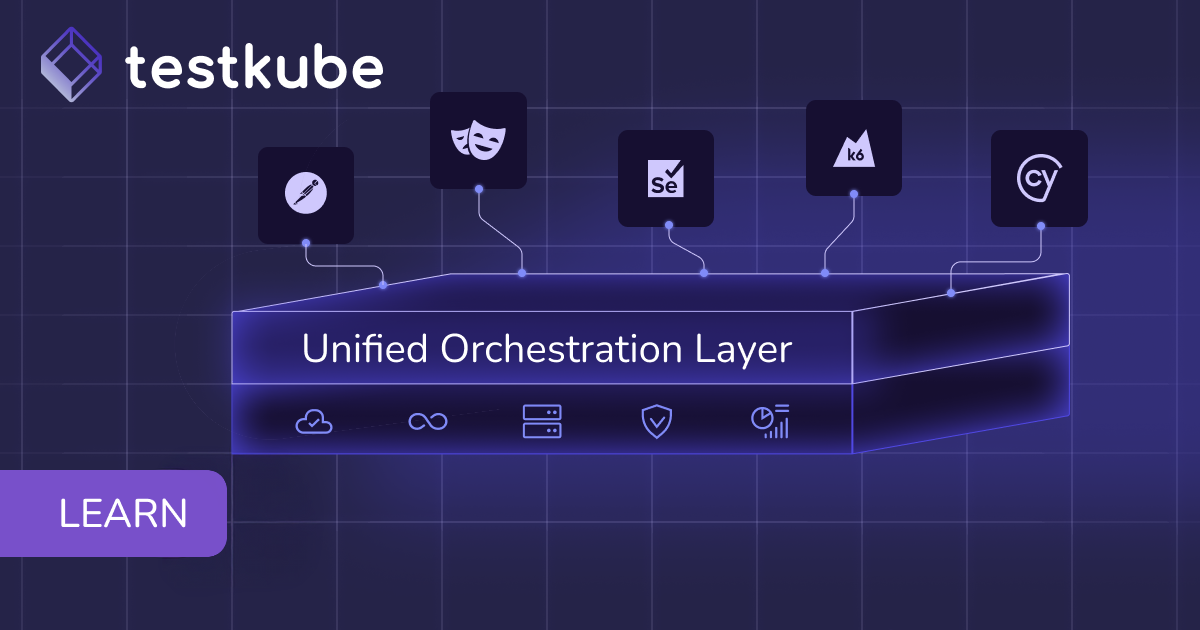
You centralize results. The problem is rarely that tests do not exist. The problem is that results live in five different systems (GitHub Actions, Grafana, spreadsheets, Slack threads, manual sign-offs) and nobody can see the full picture without polling everyone. A test orchestration layer aggregates results from every framework and environment into one place, so "are we ready?" becomes a dashboard, not a meeting.
Why do deployment meetings exist in the first place?
Deployment meetings exist because no single person or system can answer "are we ready to ship?" without polling everyone individually. When test results are scattered across CI logs, dashboards, and individual sign-offs, the meeting becomes the release gate. Not the tests, not the results: the meeting. This is expensive because senior engineering time is spent coordinating instead of building.
What is a release readiness dashboard?
A release readiness dashboard shows every test type, every environment, and every recent run in one place, with pass/fail status, timestamps, and artifacts. It replaces the manual process of polling teams about test status. Anyone who needs to answer "are we ready to ship?" can see the evidence directly, without scheduling a meeting or checking five different tools.
How do you centralize test results across multiple teams?
Use a test orchestration platform that aggregates results from every framework and trigger source into a single interface. Testkube runs tests as native Kubernetes jobs and collects logs, artifacts, and execution history in one dashboard regardless of whether tests were triggered by CI/CD, Kubernetes events, schedules, or manual runs. Every team sees the same picture of system health.
What are the four things SRE managers need for release confidence?
A single source of truth for test results across every framework and environment. Automated quality gates tied to deployments so tests run without human intervention. Visibility for non-technical stakeholders so product and leadership can see results without reading kubectl output. Historical trend data showing pass rates and performance over time, which proves stability beyond a single release.
About Testkube
Testkube is the open testing platform for AI-driven engineering teams. It runs tests directly in your Kubernetes clusters, works with any CI/CD system, and supports every testing tool your team uses. By removing CI/CD bottlenecks, Testkube helps teams ship faster with confidence.
Get Started with a trial to see Testkube in action.