Table of Contents
Start your free trial.
Start your free trial.

Start your free trial.



Table of Contents
Executive Summary
Sauce Labs is a strong platform for cross-browser and cross-device testing. If your primary concern is "does our app render correctly on Safari 17 on an iPhone 15," the device lab coverage is hard to beat.
But if your team runs Kubernetes in production and your testing needs have grown past UI testing on managed browsers, you have probably started feeling the friction. Tests run on Sauce Labs' cloud infrastructure, not inside your clusters. There is no environment parity with your actual production setup, which means tests that pass in Sauce Labs can behave differently when your application is running inside Kubernetes with real service mesh configurations, network policies, and resource constraints. Consumption-based pricing means your testing bill scales with every test run. And if you need API testing, load testing, integration testing, or security testing alongside your browser tests, you are either running a second platform or stretching Sauce Labs beyond what it was designed for.
Sauce Labs was built to test how applications look and behave across browsers and devices. It was not built to orchestrate testing across Kubernetes environments. Those are different problems.
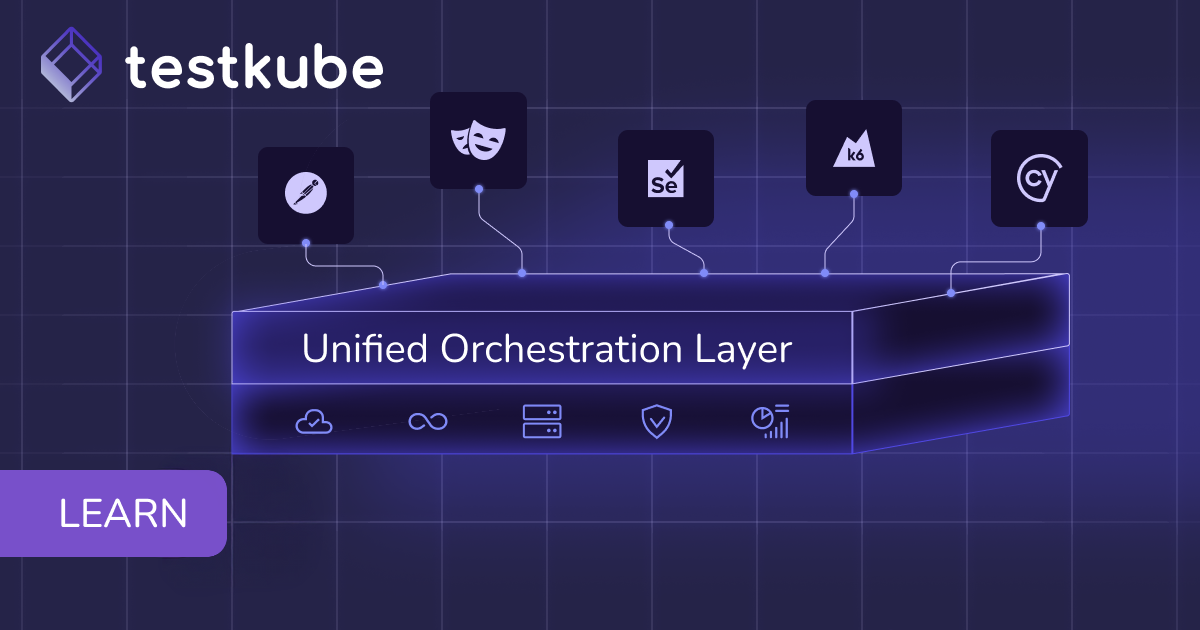
This post covers eight alternatives for teams whose testing needs have outgrown cloud-hosted browser grids and moved toward infrastructure-native test execution. Some are direct Sauce Labs competitors in the browser testing space. Others, like Testkube, are a different category entirely: a test orchestration layer that runs inside your Kubernetes clusters and complements (rather than replaces) a browser grid where you still need one.
Want the head-to-head? See the full breakdown of how Testkube compares to Sauce Labs on architecture, pricing, and testing scope. Read: Testkube vs Sauce Labs →
1. Testkube
Is Testkube a good Sauce Labs alternative for Kubernetes teams? Yes, for any test type that does not require a physical device lab. Testkube is a Kubernetes-native test orchestration platform that runs tests inside your clusters. It does not replace Sauce Labs for cross-browser and real device coverage. It replaces everything else: API, load, integration, security, and headless browser testing, with predictable pricing and full data sovereignty.
Best for: Teams running Kubernetes in production that need to orchestrate all test types inside their clusters, not just browser tests on an external grid.
Testkube is a test orchestration platform that runs tests directly inside your Kubernetes clusters as native K8s jobs. Instead of sending test requests to an external cloud and waiting for results, you define test workflows in YAML, store them in Git, and execute them inside the same infrastructure your application runs on.
The core difference from Sauce Labs: Testkube treats testing as an infrastructure concern, not a SaaS service. It is not a Sauce Labs replacement for browser and device testing. Sauce Labs does one thing well: cross-browser and device coverage. Testkube does a different thing: it orchestrates all test types inside your Kubernetes clusters. Many teams use both.
Why Testkube over Sauce Labs for Kubernetes teams
Test where your code actually runs. Sauce Labs executes tests on managed VMs and real devices in their cloud. Those environments do not match your Kubernetes clusters. Networking is different. Service discovery is different. Resource constraints are different. Testkube runs your tests as first-class Kubernetes workloads inside your actual clusters, using the same service mesh, secrets, and resource constraints as your application. Environment parity is not a feature you configure. It is how the platform works.
Every test type, not just browser tests. Sauce Labs' strength is cross-browser and cross-device UI testing. But most Kubernetes teams also need API testing, load testing, integration testing, security testing, and E2E testing that validates how services interact inside the cluster. Testkube is vendor-agnostic: Playwright, Cypress, Selenium, Postman, JMeter, k6, pytest, custom scripts. As long as it can be containerized, Testkube runs it.
Predictable pricing instead of consumption-based billing. Sauce Labs charges based on concurrency tiers and usage. As your test suite grows and you need more parallel sessions, costs scale proportionally. Testkube uses predictable seat-based pricing and runs on your existing Kubernetes infrastructure. No separate compute bill for test execution. No surprise invoices when your team adds more tests.
Data sovereignty and security by default. Sauce Labs requires your test traffic to leave your infrastructure and run on external servers. For teams with compliance requirements (SOC 2, HIPAA, data residency), that is often a non-starter. Testkube runs entirely inside your clusters. Test data, credentials, and results never leave your infrastructure. No tunnels. No firewall exceptions. No third-party data processing.
Decoupled from CI/CD pipelines. Sauce Labs tests are typically triggered from CI/CD pipelines or their own scheduler. Testkube decouples test execution entirely. Tests can be triggered by CI (Jenkins, GitHub Actions, CircleCI), CD (Argo CD or Flux), on a schedule, manually, based on Kubernetes events, or through AI agent workflows via MCP Server and the Testkube API.
Centralized results across the entire team. Sauce Labs provides test results within its own dashboard, but visibility is limited to the tests that run on their platform. If you also run tests in CI/CD pipelines or locally, those results live somewhere else. Testkube centralizes all test results, logs, and artifacts in a single dashboard that everyone on the team can access. DocNetwork reported that this visibility alone saved them 30 DevOps hours per week because they no longer needed weekly deployment coordination meetings.
When Sauce Labs still makes sense
If your primary testing need is cross-browser and cross-device UI testing with coverage across thousands of real devices, Sauce Labs is purpose-built for that. No Kubernetes-native tool is going to match their device lab. The decision is whether browser testing is the only testing your team needs, or whether it is one piece of a broader testing strategy that also includes API, load, integration, and security testing inside your clusters.
Testkube vs Sauce Labs: Platform architecture
Testkube vs Sauce Labs: Testing capabilities
2. BrowserStack
Is BrowserStack a good Sauce Labs alternative? Yes for teams that need the same core capability (cross-browser and device testing) but want different pricing or device coverage. It is not a Kubernetes-native solution. The architectural trade-offs are the same as Sauce Labs.
Best for: Teams that need the same core capability as Sauce Labs (cross-browser and device testing) but want different pricing or device coverage.
BrowserStack offers the same fundamental proposition as Sauce Labs: a cloud-hosted grid of real browsers and devices for UI testing. The device lab is comparable, the setup experience is similar, and the debugging tools (video recordings, screenshots, logs) are largely equivalent.
Where BrowserStack differs: its Automate product has more flexibility for Selenium and Appium-based test suites, its Accessibility Testing product is more developed, and its pricing structure has different breakpoints that may work better depending on your team size and test volume. See the full Testkube vs BrowserStack page and the Sauce Labs vs BrowserStack vs Testkube comparison for the three-way breakdown.
Trade-offs: Same fundamental limitations as Sauce Labs. Tests run outside your infrastructure. Not Kubernetes-native. Consumption-based pricing. If your testing needs extend beyond browser and device coverage to include API testing, load testing, or integration testing inside Kubernetes, BrowserStack does not address those use cases. You are trading one cloud testing grid for another, not changing the architecture of how your team tests.
3. LambdaTest
Is LambdaTest a good Sauce Labs alternative? Yes for teams whose primary Sauce Labs frustration is cost rather than architecture. It offers a similar device grid at competitive pricing, but tests still run outside your infrastructure on managed cloud VMs.
Best for: Teams looking for a lower-cost alternative to Sauce Labs for cross-browser testing.
LambdaTest has grown quickly as a cloud-hosted testing platform with competitive pricing relative to Sauce Labs and BrowserStack. It offers a large browser and OS grid, real device testing, and integrations with popular CI/CD tools. For teams whose primary Sauce Labs frustration is cost rather than architecture, LambdaTest is worth evaluating. See the Testkube vs LambdaTest page for the head-to-head.
The HyperExecute product adds a layer of orchestration on top of their cloud grid, which can help with test splitting and parallel execution at scale.
Trade-offs: LambdaTest is a newer platform, and while the device lab has expanded, coverage depth for specific device/OS/browser combinations may not match Sauce Labs or BrowserStack in every case. Like both competitors, tests run outside your infrastructure on managed cloud VMs. Not Kubernetes-native. If your pain point is architectural (tests need to run inside your clusters), LambdaTest does not solve that.
4. Playwright Test (Cloud and Self-Hosted)
Is Playwright Test a good Sauce Labs alternative? Yes for teams that do not need a real device lab and want framework-level independence from cloud testing grids. Playwright handles browser automation. It does not handle test orchestration, centralized reporting, or multi-framework coordination.
Best for: Teams that want to run Playwright tests without a cloud testing grid, either locally or in their own infrastructure.
Playwright has become the default choice for browser automation in modern web development. It runs headless Chromium, Firefox, and WebKit without needing an external grid. For teams that do not need thousands of real device combinations, Playwright's built-in browser support eliminates the need for Sauce Labs entirely for functional E2E testing.
Microsoft's Playwright Testing service provides a cloud-hosted option with parallel execution. But you can also self-host Playwright tests in your Kubernetes cluster using Testkube or any container-based orchestrator. See scaling Playwright tests with Testkube for the pattern.
Trade-offs: Playwright handles browser automation. It does not handle test orchestration, centralized reporting, artifact management, or multi-framework coordination. If you are running Playwright alongside k6 for load testing and Postman for API testing, you still need something to orchestrate all of those. And if you need real device testing on physical iOS and Android hardware, Playwright cannot replace a device grid.
5. GitHub Actions
Is GitHub Actions a good Sauce Labs alternative? Only as a CI/CD layer that can run tests, not as a testing platform. There are no native test concepts (test suites, framework-specific integrations, centralized reporting). For Kubernetes-native execution, self-hosted runners get you partway there.
Best for: Teams already using GitHub that want to run tests without a separate testing platform.
GitHub Actions can run your test suites as workflow steps. For teams migrating away from Sauce Labs, the appeal is consolidation: your code, CI/CD, and test execution live in one place. Matrix strategies let you run tests across multiple OS and browser combinations in parallel.
The self-hosted runner option means you can run GitHub Actions workflows inside your Kubernetes cluster, which gets you closer to environment parity than any cloud-hosted testing grid. For deeper context, see Jenkins vs GitHub Actions vs Testkube.
Trade-offs: GitHub Actions is a CI/CD tool, not a testing platform. There are no native test concepts (test suites, test reporting, framework-specific integrations). Test execution is coupled to pipeline workflows. If you need to run tests on demand, after a deployment, or triggered by Kubernetes events, you are writing custom workflows. And the browser/OS coverage from GitHub-hosted runners does not come close to Sauce Labs' device lab for cross-device testing.
6. Cypress Cloud
Is Cypress Cloud a good Sauce Labs alternative? Only if your team uses Cypress exclusively. It is a single-framework solution with strong parallelization and flaky test detection. It does not orchestrate other frameworks or test types.
Best for: Teams already using Cypress that want better parallel execution and analytics for their existing test suite.
Cypress Cloud (formerly Cypress Dashboard) provides test parallelization, flaky test detection, and analytics specifically for Cypress test suites. If your team uses Cypress for E2E testing and your primary pain with Sauce Labs is the overhead of integrating with an external grid, Cypress Cloud simplifies the workflow.
The parallelization is smart: it distributes tests based on previous run times to minimize overall wall-clock time. The analytics help identify flaky tests before they waste debugging cycles.
Trade-offs: Cypress Cloud only works with Cypress. If you also run Playwright, Selenium, k6, or Postman tests, those run somewhere else. This is a single-framework solution, not a testing platform. Tests still run on Cypress Cloud's infrastructure by default (though you can self-host runners). And the pricing is seat-based plus usage-based, which can add up for larger teams with high test volumes.
7. Testkube + Playwright (or Cypress)
Is Testkube + Playwright (or Cypress) a good Sauce Labs replacement? Yes for teams whose browser testing needs are covered by headless Chromium, Firefox, and WebKit. It combines Kubernetes-native orchestration with a strong open-source browser automation framework. You lose real device coverage but gain full environment parity and infrastructure control.
Best for: Teams that want to replace their Sauce Labs browser testing AND their CI-embedded test orchestration with a single Kubernetes-native solution.
This is not a separate product. It is the combination of Testkube's orchestration layer with your existing browser testing framework. Testkube runs Playwright, Cypress, or Selenium tests inside your Kubernetes cluster as native K8s jobs, with parallelization, artifact collection, and centralized reporting built in.
The difference from running these frameworks on Sauce Labs: your browser tests execute inside your cluster with full access to your services. No Sauce Connect tunnel. No external network hop. No environment mismatch. And your browser tests, API tests, load tests, and security tests all run through the same orchestration layer.
Trade-offs: You lose access to Sauce Labs' real device lab. If you need to test on hundreds of physical iOS and Android device models, this approach does not replace that. But if your browser testing needs are covered by headless Chromium, Firefox, and WebKit (which is the case for most Kubernetes-focused teams), the trade-off is worth it.
8. BlazeMeter
Is BlazeMeter a good Sauce Labs alternative? Yes for enterprise teams that want broader test type coverage (especially load testing). It is not Kubernetes-native. The architectural trade-offs are the same as Sauce Labs.
Best for: Enterprise teams that want a managed testing platform with strong performance testing capabilities.
BlazeMeter (now part of Perforce) is a cloud-hosted testing platform that started with load testing (JMeter-based) and expanded into functional testing, API testing, and monitoring. For teams whose Sauce Labs frustration is the limited scope beyond browser testing, BlazeMeter offers broader test type coverage. See the Testkube vs BlazeMeter comparison.
The performance testing capabilities are mature: distributed load generation, real-time reporting, and integrations with Taurus for test-as-code workflows.
Trade-offs: BlazeMeter runs on external cloud infrastructure, not inside your Kubernetes clusters. The functional testing capabilities are less mature than the performance testing side. Pricing is consumption-based and can be expensive at scale. And the platform has changed hands multiple times (CA Technologies to Broadcom to Perforce), which has introduced uncertainty about product direction and long-term investment.
Side-by-side comparison
Start here: What types of testing does your team actually need?
If the answer is primarily cross-browser and cross-device UI testing with real device coverage, BrowserStack, LambdaTest, or Sauce Labs itself are purpose-built for that. The alternatives in that group are trading on price, device coverage, and features rather than architecture.
Next: Do your tests need to run inside your Kubernetes clusters?
If the answer is yes, your options narrow to Testkube (or Testkube + Playwright/Cypress for browser tests). No cloud-hosted testing grid runs tests inside your clusters. Self-hosted runners on GitHub Actions or Cypress can get you partway there, but they are not purpose-built for Kubernetes-native execution.
Next: Do you need more than one type of testing?
If you are running API tests, load tests, integration tests, and E2E tests alongside browser tests, you need a platform that handles all of them. Single-framework solutions (Playwright Test, Cypress Cloud) and browser grids (BrowserStack, LambdaTest) each cover one piece. Testkube and BlazeMeter cover multiple test types, but only Testkube runs inside your infrastructure.
How to choose
The right tool depends on what is actually driving you away from Sauce Labs.
If your primary pain is price, LambdaTest offers similar capabilities at lower cost. BrowserStack has different pricing breakpoints that may fit better. Both are cloud-hosted testing grids with the same architectural trade-offs as Sauce Labs.
If your primary pain is that you need more than browser testing, BlazeMeter offers broader test type coverage (especially load testing). Testkube covers every test type and runs inside your infrastructure. GitHub Actions can run any test but without native test orchestration features.
If your primary pain is that tests do not run in the same environment as your application, and environment mismatch is causing flaky results or false confidence, you need testing inside your Kubernetes clusters. That is specifically what Testkube is built for.
If your primary pain is vendor lock-in to a SaaS testing platform, Playwright and Cypress give you framework-level independence. Testkube gives you infrastructure-level independence by running any framework on your own clusters.
Most teams dealing with Kubernetes at scale end up splitting their testing strategy: a browser/device grid for cross-device UI testing where coverage matters, and a Kubernetes-native orchestration layer for everything else. The decision is which side of that split needs the most attention right now.
Key takeaways
- Sauce Labs is purpose-built for browser and device testing. Its real-device coverage is its core strength. Kubernetes-native alternatives do not replace that capability.
- Most teams running Kubernetes end up with both a device grid and an orchestration layer. The grid handles cross-device UI testing where coverage matters. The orchestration layer handles every other test type inside the cluster.
- Different pain points map to different alternatives. Price → LambdaTest. Broader test types → BlazeMeter or Testkube. Environment parity → Testkube. Framework independence → Playwright or Cypress. Picking the wrong alternative for the wrong pain just relocates the problem.
- Single-framework solutions are not testing platforms. Cypress Cloud and Playwright Test handle one framework each. If you run multiple frameworks (API, load, browser, integration), you still need an orchestration layer above them.
- Environment parity is the structural advantage of Kubernetes-native testing. Tests sharing the same network, DNS, secrets, and service mesh as production stop producing false failures from infrastructure mismatch.
Frequently asked questions
What are the best Sauce Labs alternatives for Kubernetes teams?
It depends on the problem you are solving. For Kubernetes-native test orchestration, Testkube runs tests inside your clusters and supports every test type. For browser and device coverage at the same scope as Sauce Labs, BrowserStack and LambdaTest are direct competitors with different pricing. For single-framework solutions, Playwright Test and Cypress Cloud cover their respective frameworks. For broader performance testing, BlazeMeter is enterprise-focused but still cloud-hosted.
Can I use Testkube alongside Sauce Labs instead of replacing it?
Yes. Many teams keep Sauce Labs for cross-browser and device testing where real device coverage matters, and use Testkube for everything else: API testing, load testing, integration testing, and E2E testing inside their Kubernetes clusters. The two platforms address different problems and coexist cleanly in the same testing strategy.
Why would I leave Sauce Labs if their device coverage is the best?
If device coverage is your primary concern, you probably should not leave. Sauce Labs' device lab is genuinely strong. The question is whether you also need testing that runs inside your Kubernetes infrastructure, and whether paying for a cloud grid makes sense for tests that do not need real device hardware. Many teams find 80% of their tests can run headless in the cluster.
How does environment parity work in Testkube vs Sauce Labs?
Sauce Labs runs tests on managed VMs and real devices in their data centers. Your Kubernetes networking, service mesh, secrets, and resource constraints are not present. Sauce Connect creates a tunnel for accessing internal services, but the execution environment does not match production. Testkube runs tests as Kubernetes jobs inside the same cluster where your application runs, with the same networking, services, and constraints.
Which Sauce Labs alternative supports the most test types?
Testkube supports every container-based testing framework: Playwright, Cypress, Selenium, Postman, JMeter, k6, pytest, custom scripts. It orchestrates browser, API, load, integration, security, and E2E testing through one platform. BlazeMeter covers multiple test types but runs on external cloud infrastructure. Single-framework solutions like Playwright Test and Cypress Cloud cover their own frameworks only.
What if we need real mobile device testing?
Neither Testkube nor any Kubernetes-native tool replaces a physical device lab for testing on real iOS and Android hardware. If you need that, BrowserStack, LambdaTest, or Sauce Labs are purpose-built for it. The decision is whether you also need a separate platform for everything that does not require a physical device, which is where Kubernetes-native test orchestration fits.
How does Sauce Labs pricing compare to its alternatives?
Sauce Labs uses concurrency-based pricing where costs increase with parallel sessions and usage. BrowserStack and LambdaTest use similar consumption models with different breakpoints. BlazeMeter is consumption-based and can be expensive at scale. Testkube uses predictable seat-based pricing and runs on your existing Kubernetes infrastructure, so there is no separate compute bill for test execution.
About Testkube
Testkube is the open testing platform for AI-driven engineering teams. It runs tests directly in your Kubernetes clusters, works with any CI/CD system, and supports every testing tool your team uses. By removing CI/CD bottlenecks, Testkube helps teams ship faster with confidence.
Get Started with a trial to see Testkube in action.