No items found.


AI Test Authoring
Table of Contents






.jpg)
Writing one test is easy. Keeping coverage up as the codebase grows, while shipping, is the part that quietly loses. AI authoring is aimed squarely at that gap.
Test Coverage falls behind because test creation does not scale
The barrier to good test coverage is rarely a single hard test. It is the cumulative cost: writing tests, keeping them current as the code changes, and running them at scale all take time most teams do not have. So coverage slips, and the gaps show up later, in production, where they are most expensive.
That pressure is getting worse, not better. In Stack Overflow's 2025 Developer Survey, 80% of developers said they now use AI to write code but only 29% trust its output. More code, shipped faster, trusted less, all to be validated with the same human bandwidth. If test creation stays a manual job, the gap between code shipped and code tested keeps widening..
Describe it in plain language, get a real test
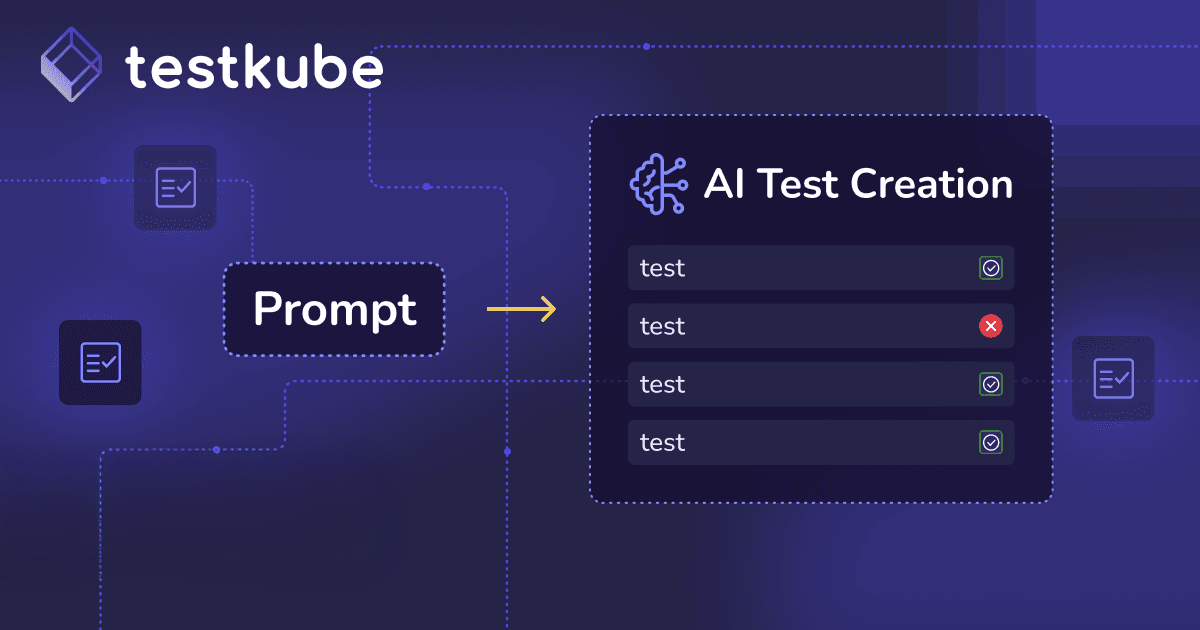
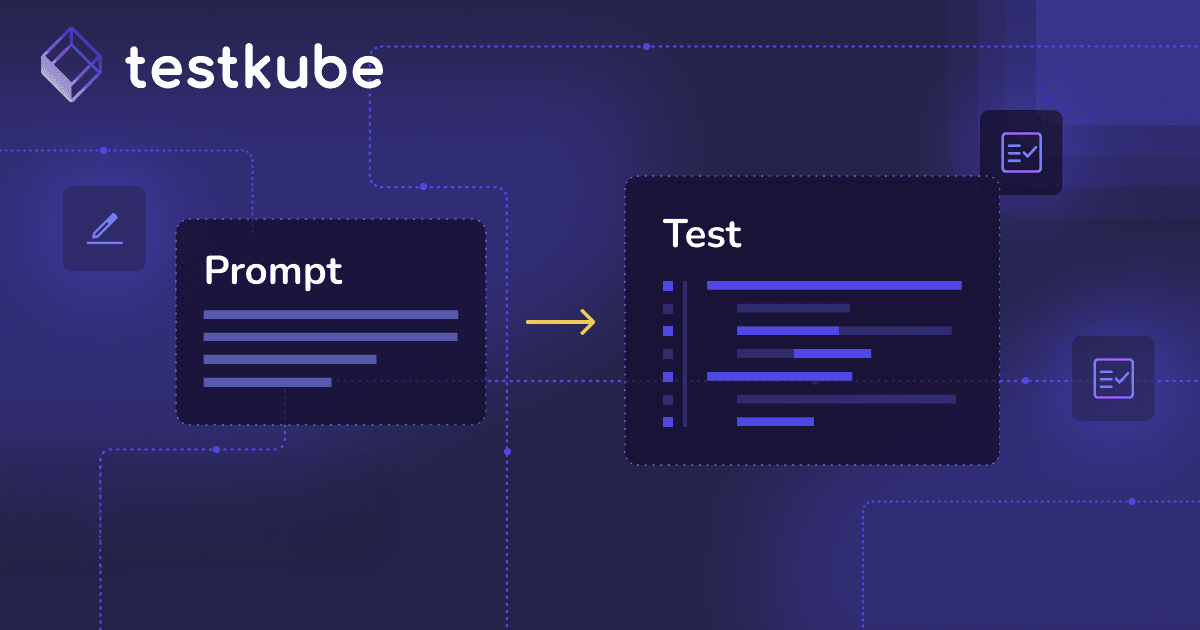
With Testkube’s AI-powered test creation, an engineer describes what they want to test in plain language. Testkube generates the test in the framework of their choice (Selenium, Playwright, K6, Pytest, etc) and runs it against real infrastructure, not a simulated stand-in or external cloud. The output is a working test in the tooling your team already uses, not a snippet you still have to wire up yourself.
This is what closes the test coverage gap: test creation stops being the bottleneck, so your team can cover more of the application before it reaches production without spending the time it does not have.
Why generating tests inside the Testkube platform matters
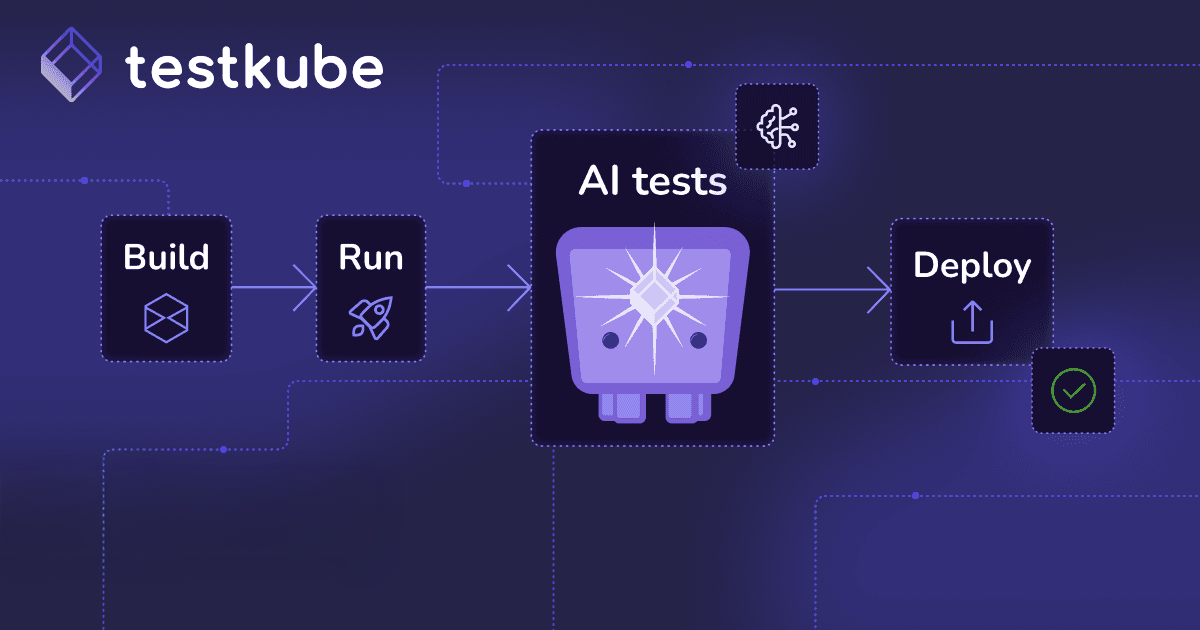
A lot of AI in developer tooling sits outside the system it claims to help. It reads logs after the fact and describes what happened. Testkube took a different path and built AI into the execution layer itself, so its AI agents have the same access the execution engine does: every test workflow, artifact, and log, in real time. For test creation, that means the AI is generating tests with direct knowledge of how your tests actually run and against real infrastructure, rather than guessing from the outside. AI built on top of a system can describe it. AI built into it can do the work.
Part of one AI layer, not a standalone trick
AI-powered test creation is one piece of Testkube AI, which embeds AI across the platform rather than bolting it onto a dashboard. Alongside authoring, autonomous agents respond to failures automatically, and the MCP Server exposes live test context to any MCP-aware tool like Claude Code or Cursor. So a test the AI writes runs in the same system where AI also analyzes failures and where your other AI tools can read execution context directly. Creation, execution, and analysis sit in one place instead of scattered across tools.
Why teams run this on Testkube
Generic AI coding assistants can draft a test, but they draft it blind: no knowledge of how your tests execute, what infrastructure they run against, or how they behave once they run. Testkube generates tests from inside the execution layer, in the framework you already use, and runs them against real infrastructure on the spot. The test is not just written, it is written and validated where it will actually live, which is the difference between a plausible-looking snippet and a test you can trust.
Close the coverage gap without the authoring tax
Coverage should not be capped by how much test code your team can hand-write. Testkube lets engineers describe a test in plain language and generates it in their framework, run against real infrastructure, so coverage can grow at the pace the code does.
Test faster, ship with confidence, and stay in control.
Run any test, anytime, anywhere
Curious how Testkube can support your team's testing strategy?
Fill out the form and we'll walk you through what's possible.