Table of Contents
Start your free trial.
Start your free trial.

Start your free trial.



Table of Contents
Executive Summary
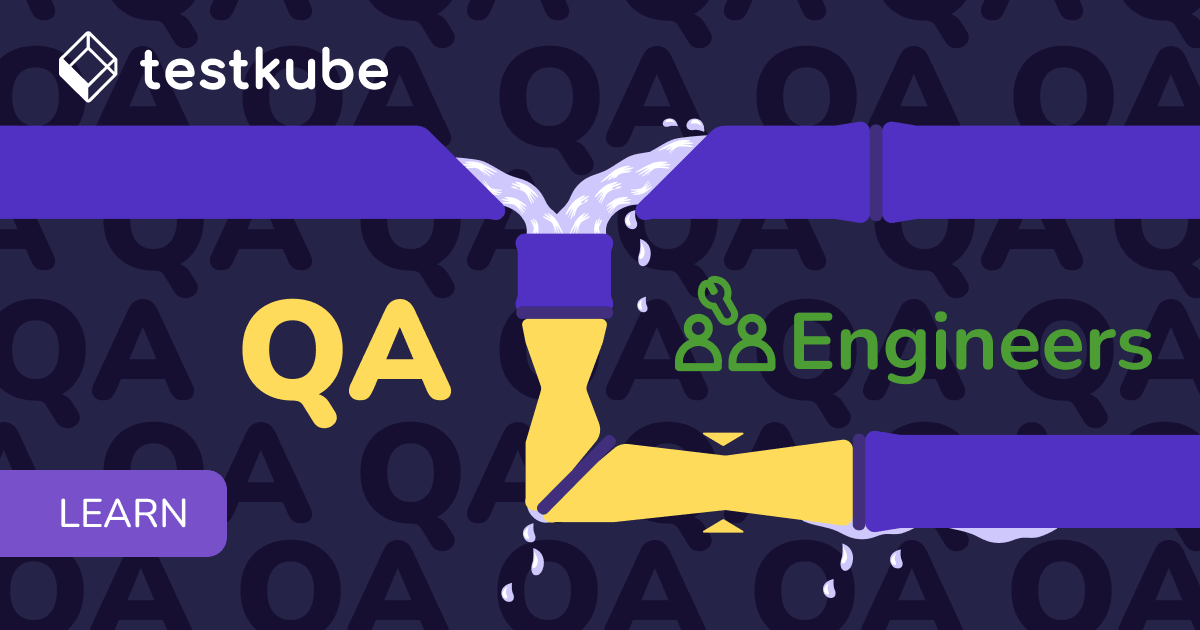
AI-assisted development is often framed as a productivity miracle. Engineering leaders see the promise of doubled velocity and reduced friction. The reality is more complicated. While AI accelerates code generation, it simultaneously threatens to dismantle traditional QA strategies. The risk is not that AI replaces the engineer. The risk is that it overwhelms the systems designed to ensure software reliability. This post is about how testing AI-generated code needs to evolve, and what engineering leaders need to do about it.
This post covers how AI-generated code changes where defects appear, why traditional QA strategies struggle to keep up, and what engineering leaders need to do to build testing infrastructure that scales with this new development velocity.
Want the technical companion piece? Why unit tests cannot catch AI code failures and what system-level testing validates instead. Read: Why AI code demands system-level QA →
The quiet risk in AI-generated code
Why does AI-generated code create defects that traditional tests miss? AI generates code based on patterns from training data, not from full understanding of the system where the code will run. The output can be syntactically valid and functionally broken at the same time. Defects move from unit-level errors to integration boundaries, race conditions, and load-dependent edge cases that unit tests cannot reach.
Consider a microservices application where an AI tool produces a new API endpoint for user authentication. The code compiles, unit tests pass on isolated functions, and it deploys without issue. In production, it mishandles token refresh logic during high-load scenarios, causing cascading failures across dependent services like payment processing.
This is the "looks correct" problem. AI models generate code based on patterns from training data, not from a full understanding of the system where the code will run. Defects do not disappear. They move to places that are harder to detect.
A human engineer understands the "why" behind a specific implementation, accounting for legacy edge cases, non-obvious dependencies, and specific system behaviors. AI operates on pattern recognition. The output can be syntactically valid and functionally broken at the same time.
Why your existing QA strategy was not built for AI
What about AI-assisted development breaks traditional QA? AI changes three variables at once: volume (3-5x more code per engineer), velocity (faster shipping), and variability (more contributors generating more integration complexity). Test suites sized for human output cannot cover the expanded surface area. Coverage gaps that were manageable become systemic.
Traditional QA was designed around a set of assumptions that AI now invalidates. Human engineers produce code at a relatively predictable rate. Test suites are sized accordingly, coverage targets are set based on historical defect rates, and CI pipelines are tuned to handle a known volume of commits per day.
AI changes all three variables at once across volume, velocity, and variability.
The coverage problem
Test suites designed around a human shipping cadence have coverage gaps baked in, but those gaps were manageable because the rate of new surface area was bounded. When code volume doubles or triples, those gaps become systemic.
A microservice that had 78% branch coverage last quarter might effectively have 55% coverage today, simply because the new code paths added over the last six weeks have no corresponding tests. Even if the testing strategy remains unchanged, relative coverage of the system declines as development velocity increases.
The infrastructure problem
Most engineering organizations have test execution siloed across repositories, CI pipelines, and frameworks. Integration tests live in one place. Contract tests in another. End-to-end tests in a third. There is no unified execution layer and no consolidated signal on what is actually covered. This was manageable friction before. Under AI-assisted velocity, it becomes a structural liability. The pattern shows up as pipeline sprawl across most engineering organizations.
The new QA pressure points for engineering leaders
AI-assisted development does not simply introduce more code. It expands the number of interactions inside a system and increases the speed at which those interactions change. This creates several new pressure points:
- Rapid expansion of untested surface area as AI tools generate code across multiple services simultaneously.
- Hidden integration defects that only appear when services interact under realistic conditions.
- Flaky tests that become harder to diagnose when multiple services are evolving at the same time.
- Higher risk of regression reaching production due to faster deployment cycles.
Returning to the authentication example: in a real development environment, multiple services may be updated within the same release window, each with AI-assisted code changes. A CI pipeline might begin reporting intermittent failures in integration tests involving authentication and payment flows. Engineers must determine whether the failure originates from infrastructure instability, a race condition in the test setup, or the authentication change itself.
Because several services changed simultaneously, isolating the root cause becomes significantly more complex. Teams may rerun pipelines, inspect logs across services, and manually trace request flows before identifying the underlying issue. This investigation slows feedback loops at the exact moment organizations aim to accelerate development.
Making testing infrastructure a first-class engineering concern
Modern engineering teams cannot treat testing as a secondary activity. As systems scale and AI-assisted development increases the rate of code generation, testing infrastructure must evolve to provide reliable, scalable quality signals. Three practices matter most.
Treat tests as first-class engineering artifacts
Tests should evolve alongside the systems they validate. Managing tests with the same discipline as application code ensures coverage stays relevant as services change. In practice, this means versioning tests in repositories alongside application code, reviewing tests through pull requests just like production code, and continuously updating tests as system behavior evolves.
Scale test execution with cloud-native infrastructure
Static CI runners often become bottlenecks when executing large suites. Running tests on containerized infrastructure enables parallel execution across environments, dynamic scaling based on workload, and isolation between test frameworks and environments. This allows teams to scale testing capacity the same way they scale applications. The shift to scalable test execution is what makes the new velocity sustainable.
Expand test coverage for AI-generated code
AI-assisted development changes the type of defects teams encounter. Failures often occur at integration boundaries or through incorrect assumptions about system behavior, not through simple syntax errors. To address this, teams need coverage beyond unit tests: contract tests to validate service interfaces, integration tests against realistic staging environments, and load tests to uncover performance regressions in generated logic.
How teams structure test workflows for AI velocity. The patterns for handling integration complexity at scale. Read: Continuous validation for AI coding →
Centralized observability for quality signals
Test results are most valuable when they can be analyzed across the entire system. Fragmented tooling hides trends like rising flakiness rates or coverage degradation. Centralized test observability allows teams to track test failures and trends across services, correlate test results with deployments and code changes, and identify reliability issues before they reach production.
How Testkube supports this infrastructure
How does Testkube help scale QA for AI-assisted development? Testkube is a containerized test orchestration platform that runs tests as native Kubernetes jobs inside your cluster. It supports tests as Git-versioned artifacts, scales execution across cluster nodes, handles diverse test types through one platform, and centralizes results across every framework so engineering leaders get a single signal on system reliability.
Testkube is a containerized test orchestration platform that connects test definitions, execution infrastructure, and results observability within the cluster. It supports each of the practices above.
For tests as first-class artifacts: Testkube integrates directly with Git-based workflows. Tests can be versioned alongside application code and automatically executed when deployments change through test triggers, ensuring every change is validated without manual intervention.
For scalable execution: Testkube runs natively inside the cluster. Test executions use Kubernetes scheduling and resource management, running as containerized workloads with parallel execution across nodes and isolated environments. Teams can run tools like Cypress, Postman, Playwright, k6, JUnit, or custom executors without maintaining separate CI execution infrastructure.
For diverse test types: Testkube supports API testing, integration testing, contract validation, and performance testing through a single platform rather than distributed across multiple tools. The full list of supported frameworks lives in the test workflow examples docs.
For centralized observability: Testkube aggregates execution logs, results, and metadata across all frameworks running in the cluster, giving teams a consolidated view of system reliability and test health. DocNetwork saved 30 DevOps hours per week from this single dashboard view alone.
What engineering leaders should decide now
AI-assisted development is increasing the volume and velocity of code entering production systems. Maintaining reliability requires a few structural decisions.
Invest in scalable testing infrastructure before velocity exposes the gaps. Reliable infrastructure frees engineers to write meaningful tests instead of managing environments, and lets teams ship with confidence rather than firefighting production incidents.
Define clear ownership between platform and engineering teams. Platform teams own the execution infrastructure, pipelines, and observability. QA and developers own the test logic, scenarios, and coverage. This separation keeps infrastructure reliable while engineering teams stay focused on validating application behavior. The pattern shows up across the test unification in platform engineering conversation more broadly.
Establish quality gates and track testing metrics. Enforce coverage thresholds before merging, zero critical failures before deployment, and flakiness rates below a defined limit. Track flakiness trends, coverage changes per sprint, and mean time to test feedback alongside delivery metrics. These are early indicators of system stability, not lagging signals. For the broader platform view, see continuous quality governance in platform engineering.
Key takeaways
- AI changes three variables at once. Volume (3-5x more code per engineer), velocity (faster shipping), and variability (more integration complexity). Test suites built for human cadence cannot scale across all three simultaneously.
- Defects move, they do not disappear. AI-generated code fails most often at integration boundaries and system interactions, not at the unit level. Traditional unit tests pass while production breaks under load or in edge cases.
- Coverage degrades automatically. A service with 78% coverage last quarter can effectively have 55% today simply because new code paths outpaced new tests. Velocity erodes coverage even when nothing about the test strategy changed.
- The fix is structural, not tactical. Treat tests as first-class engineering artifacts. Scale execution on cloud-native infrastructure. Expand beyond unit tests. Centralize observability across frameworks.
- Engineering leaders need clear ownership. Platform teams own execution infrastructure and observability. Developers and QA own test logic and coverage. Without this separation, testing becomes a shared responsibility nobody maintains.
Conclusion
AI accelerates how software is written. It does not reduce the need for testing. In most cases, it increases that need, because more code is entering the system faster than before. Defects are not disappearing. They are moving deeper into integration points, system interactions, and edge cases that unit tests were never designed to catch.
Engineering teams that continue relying on QA strategies designed for slower development cycles will struggle to keep pace. The shift required is in how testing infrastructure is designed, scaled, and owned, not in how individual tests are written.
Frequently asked questions
About Testkube
Testkube is the open testing platform for AI-driven engineering teams. It runs tests directly in your Kubernetes clusters, works with any CI/CD system, and supports every testing tool your team uses. By removing CI/CD bottlenecks, Testkube helps teams ship faster with confidence.
Get Started with a trial to see Testkube in action.